
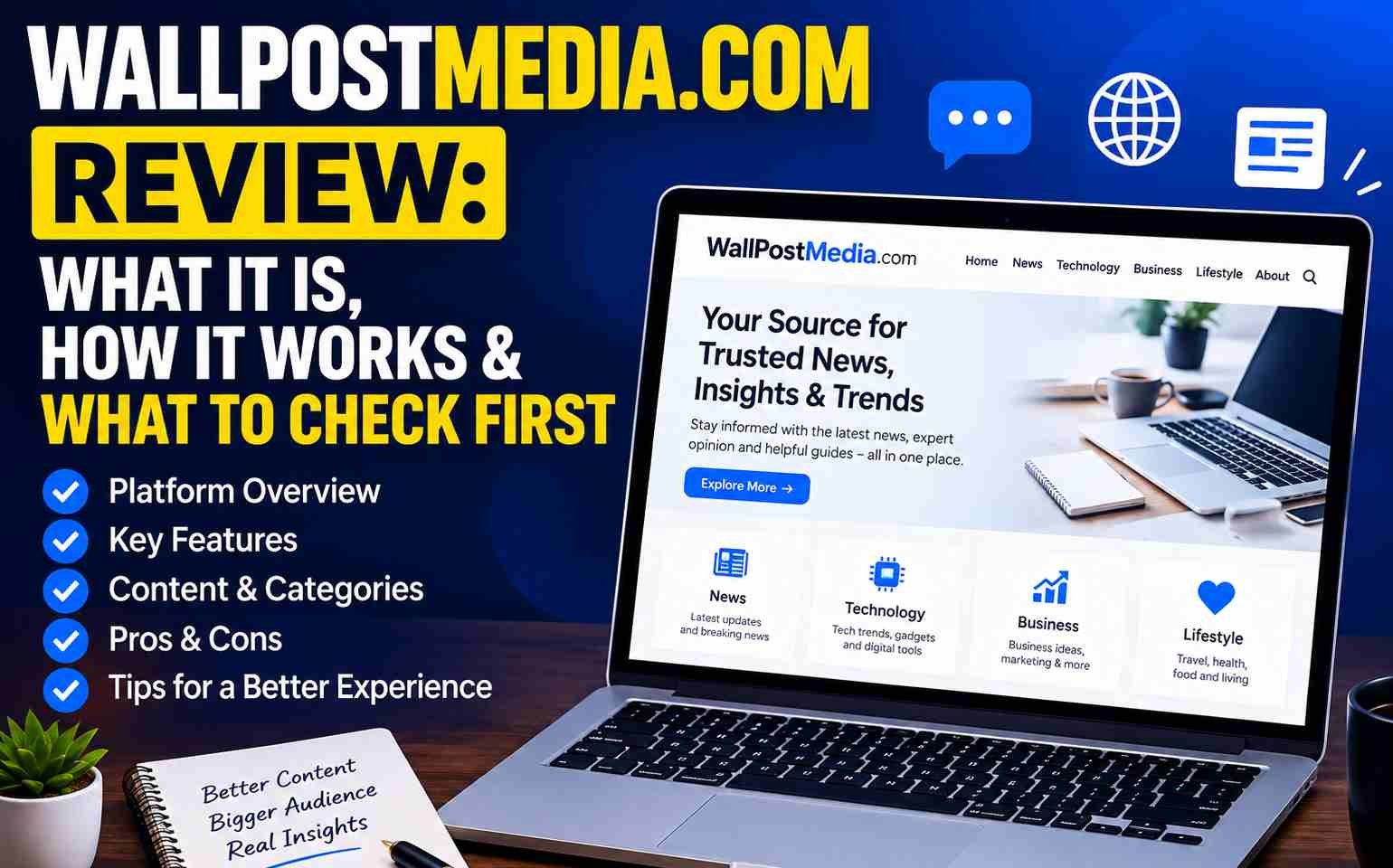
Introduction to Wallpostmedia.com
In today’s digital world, online publishing platforms play an important role in sharing information, delivering news, and helping readers discover useful content. Wallpostmedia.com is a website worth exploring for readers interested in online media, digital content, and information published across the web. Understanding a website’s purpose, content structure, and publishing approach helps readers determine whether it meets their interests and information needs.
As digital media continues to evolve, websites must offer accessible content, intuitive navigation, and a consistent reading experience. Readers expect to find relevant information without navigating through unnecessary pages or struggling with complicated layouts. Publishers, meanwhile, need to organize their content effectively, maintain editorial standards, and build trust with their audiences.
In this guide, we explore the role of Wallpostmedia.com in the broader digital publishing landscape, the features readers should look for when evaluating an online media website, and the factors that contribute to a useful and reliable publishing experience.
What Is Wallpostmedia.com?
Wallpostmedia.com is the domain name of an online website. To understand its specific purpose, readers should examine its current homepage, published articles, About page, and other publicly available information.
A website’s identity is best understood through the content it actually publishes rather than assumptions based on its domain name. For example, an online media website may focus on news, lifestyle, technology, business, entertainment, educational resources, or a combination of subjects. Its editorial direction determines the audience it serves and the information visitors can expect to find.
When exploring Wallpostmedia.com, readers can begin by reviewing its main navigation, article categories, publication dates, and author information. These elements provide useful context about the website’s structure and publishing activity.
A well-organized media website generally makes it easy to understand its purpose, locate relevant articles, and move between related topics. Clear navigation and descriptive page titles also help visitors find information efficiently.
The Importance of Online Media Websites
Online media platforms have transformed the way people access information. Traditional publishing once depended heavily on printed newspapers, magazines, and other physical publications. Today, websites allow publishers to distribute content to readers across different countries and time zones.
Digital publishing offers several advantages:
- Accessibility: Readers can access online content from computers, smartphones, and tablets.
- Timely updates: Publishers can revise articles and publish new information without waiting for a print cycle.
- Content variety: Websites can organize articles around multiple subjects and audience interests.
- Searchability: Search engines help users discover information based on their questions and interests.
- Global reach: Online publications can reach audiences beyond their immediate geographic locations.
These advantages make digital publishing an important part of modern communication. However, accessibility alone does not guarantee a valuable reading experience. The quality, accuracy, organization, and usefulness of the published information remain essential.
For a website such as Wallpostmedia.com, evaluating these characteristics helps readers understand how effectively its content serves its intended audience.
Exploring Content and Website Categories
A useful way to evaluate an online publishing platform is to examine the topics it covers. Content categories help readers identify relevant material and understand the publication’s editorial focus.
Depending on the website’s actual offerings, common digital publishing categories may include the following.
News and Current Affairs
News content provides updates about events, developments, and issues that affect individuals, communities, and businesses. Reliable news publishing requires careful fact-checking, appropriate sourcing, and clear distinctions between confirmed information and commentary.
Readers evaluating news articles should consider publication dates, cited sources, and whether the information reflects the latest available developments.
Technology and Digital Trends
Technology content helps readers understand software, digital tools, emerging technologies, and changes in the online environment. Useful technology articles explain concepts in accessible language and provide practical information that readers can apply.
Clear explanations, relevant examples, and accurate technical details can make this type of content particularly valuable.
Business and Entrepreneurship
Business publishing may cover company developments, marketing strategies, entrepreneurship, productivity, and digital business operations. Readers often look for actionable guidance rather than broad claims.
High-quality business articles explain their recommendations, identify relevant limitations, and provide enough context for readers to make informed decisions.
Lifestyle and Entertainment
Lifestyle and entertainment content can address everyday interests, popular culture, leisure activities, and personal interests. Engaging writing, clear organization, and relevant examples help make these articles accessible to a broad audience.
These categories represent common areas of online publishing, not a verified inventory of Wallpostmedia.com’s current content. Readers should consult the website directly to confirm which subjects it covers.
How to Navigate Wallpostmedia.com Effectively
A straightforward navigation system improves the experience of visiting any online publication. When exploring Wallpostmedia.com, begin with its homepage and identify the main menu, available categories, search function, and recently published articles.
The homepage can provide an overview of the site’s editorial direction. Category pages, when available, help organize articles around specific subjects, while individual article pages provide the full content.
Readers can make their browsing more efficient by following a few practical steps:
- Review the main menu. Identify the sections that match your interests.
- Check article titles and descriptions. Look for pages that directly address your questions.
- Review publication dates. Recent information is particularly important for rapidly changing subjects.
- Examine the article’s sources. Look for links, references, and supporting evidence where appropriate.
- Explore related articles. Internal links can help you understand a subject in greater depth.
- Check the About and Contact pages. These pages may explain the publisher’s purpose and provide ways to communicate with the website’s team.
If a page contains unclear information or unsupported claims, compare its statements with reliable independent sources before relying on them.
What Makes an Online Publishing Website Useful?
A website’s usefulness depends on more than the amount of content it publishes. Several practical characteristics contribute to a positive experience.
Clear and Readable Content
Readers should be able to understand an article without unnecessary complexity. Descriptive headings, concise paragraphs, and logical transitions help organize information.
Important points should appear in the appropriate sections rather than being repeated throughout the article. This approach respects the reader’s time and makes longer pieces easier to navigate.
Mobile-Friendly Design
Many people browse websites on mobile devices. Responsive design helps content adapt to different screen sizes, keeping text readable and navigation accessible.
A good mobile experience also minimizes intrusive elements that interrupt reading. Buttons, menus, and links should be easy to use on smaller screens.
Fast Page Loading
Page speed affects how comfortably visitors can access information. Oversized images, unnecessary scripts, and poorly optimized resources can slow down a website.
Publishers can improve performance through image compression, efficient caching, optimized code, and reliable hosting. Faster pages help visitors reach the information they need with less waiting.
Logical Content Organization
Clear categories and meaningful internal links help readers move between related topics. A consistent structure also makes it easier to understand how individual articles fit within the broader publication.
When content is organized effectively, visitors can discover useful information without repeatedly returning to the homepage.
Transparent Publishing Practices
Trustworthy publishing benefits from clear authorship, appropriate editorial information, and accessible contact details. Articles covering important or sensitive subjects should provide adequate sourcing and distinguish factual reporting from personal opinion.
These practices help readers assess the credibility of the information they encounter.
How to Evaluate the Credibility of Wallpostmedia.com
Before relying on information from any online publication, readers should assess its credibility. The following checks can help establish whether an article deserves further consideration.
Check the author and publisher. Look for information about the author, editorial team, or organization responsible for the content. Relevant experience and transparent ownership can provide useful context.
Examine the evidence. Strong informational articles support important claims with reliable sources, original research, official statements, or verifiable data when appropriate.
Consider the publication date. An article may have been accurate when published but become outdated as circumstances change. This is especially important for news, software, finance, and technology topics.
Compare information across sources. Consult multiple independent publications when a claim is significant or controversial. Agreement among credible sources can provide additional confidence, although each source should still be evaluated individually.
Look for corrections and updates. Responsible publishers should have ways to correct factual errors and update information when necessary.
Distinguish advertising from editorial content. Sponsored material can provide useful information, but readers should be able to identify commercial relationships that may influence the presentation of a recommendation.
No single factor proves that a website is reliable or unreliable. A balanced assessment considers the overall quality of its publishing practices and the evidence supporting its claims.
Wallpostmedia.com and the Digital Publishing Experience
Modern digital publishing combines editorial work with technology, design, and content distribution. A successful online publication must present information in a format that readers can access and understand.
Website structure plays an important role in this process. Descriptive URLs, clear headings, relevant categories, and useful internal links help readers understand where they are and what they can find next.
Search functionality can further improve content discovery, particularly on websites with large article collections. When visitors can search by topic or keyword, they can move directly toward relevant material rather than browsing every section manually.
Accessibility is another important consideration. Readable typography, sufficient color contrast, descriptive link text, and meaningful image descriptions help more people use a website comfortably.
For publishers, these elements support a more consistent experience across devices and assist visitors with different browsing needs.
When assessing Wallpostmedia.com, examining these practical details can provide a clearer picture of its usability than relying on the domain name alone.
The Role of SEO in Online Media Publishing
Search engine optimization helps readers discover relevant content through search engines. For digital publishers, effective SEO begins with understanding the audience and producing material that satisfies genuine search intent.
A well-optimized article should have a clear purpose, a descriptive title, and headings that accurately represent its content. Relevant terms should appear naturally where they help explain the subject.
Internal linking can connect related articles, while descriptive metadata helps communicate a page’s topic in search results. Image optimization, mobile usability, and technical accessibility also contribute to a better publishing experience.
However, useful content should take priority over keyword repetition. Repeating a domain name or inserting search phrases into every paragraph does not automatically make an article more relevant.
Publishers should instead focus on answering readers’ questions, explaining important details, supporting factual claims, and avoiding unnecessary repetition.
For a website like Wallpostmedia.com, the appropriate SEO strategy depends on its actual niche, existing content, audience, and publishing goals. A technology publication, for example, would require a different editorial approach from a local news portal or a lifestyle magazine.
Why Fresh and Relevant Content Matters
Readers often visit online publications to find information that addresses a current need. Keeping articles accurate and relevant helps maintain their usefulness over time.
Some subjects require frequent updates. News, product specifications, software instructions, and industry developments can change quickly. Other topics, such as general educational explanations, may remain useful for years with only occasional revisions.
A practical content maintenance process includes reviewing outdated statistics, replacing broken links, correcting factual errors, and updating instructions when products or services change.
Publishers should also avoid making unnecessary changes solely to give old articles the appearance of freshness. Updates should improve accuracy, completeness, or usability.
Readers can contribute to their own information quality by checking publication dates and looking for more recent sources when a topic is time-sensitive.
Frequently Asked Questions
1. What is Wallpostmedia.com?
Wallpostmedia.com is a website identified by its domain name. To determine its current purpose, subject areas, and services, visit the live website and review its homepage, published content, and About page.
2. What type of content does Wallpostmedia.com publish?
Its current content categories should be verified directly on the website. The homepage, navigation menu, and article archive are useful places to identify its main publishing topics.
3. Is Wallpostmedia.com a news website?
The domain name alone does not establish whether the website operates as a news publication. Review its current articles, editorial descriptions, and publication history to determine its focus.
4. How can readers evaluate information published on Wallpostmedia.com?
Readers should examine authorship, publication dates, supporting evidence, and editorial transparency. For important claims, comparing information with reliable independent sources is also advisable.
5. Can Wallpostmedia.com be accessed on mobile devices?
You can try visiting the website through a mobile browser. Its actual mobile compatibility and performance depend on its current design and technical implementation.
6. Why should readers check article publication dates?
Publication dates help readers understand whether information is current. This matters particularly for news, technology, regulations, and other subjects that change frequently.
7. How can visitors find specific information on the website?
Start with the homepage and available navigation categories. If the website provides a search function, use relevant keywords to locate articles that match your interests.
Conclusion
Wallpostmedia.com can be evaluated by examining its published content, website structure, accessibility, and editorial transparency. These factors help readers understand a digital publication’s purpose and determine whether its information meets their needs.
When exploring any online media website, readers should look beyond its domain name and assess the quality of the material it provides. Clear writing, relevant information, credible sourcing, and convenient navigation are important characteristics of a useful publishing experience.